


Reservoirs for Nature at Myponga Reservoir Reserve

For Stage 1, we are planting more than 106,000 seedlings across 232 hectares of previously cleared native grassy woodland at Myponga Reservoir Reserve.

We’re also establishing 60 hectares of native grass meadows in the reserve using locally collected seed from around 20 native grass species.

Restoring native vegetation

More than 130 species of trees, shrubs, grasses and groundcovers are being restored at Myponga Reservoir Reserve.

This map shows the different vegetation communities being restored across the site.
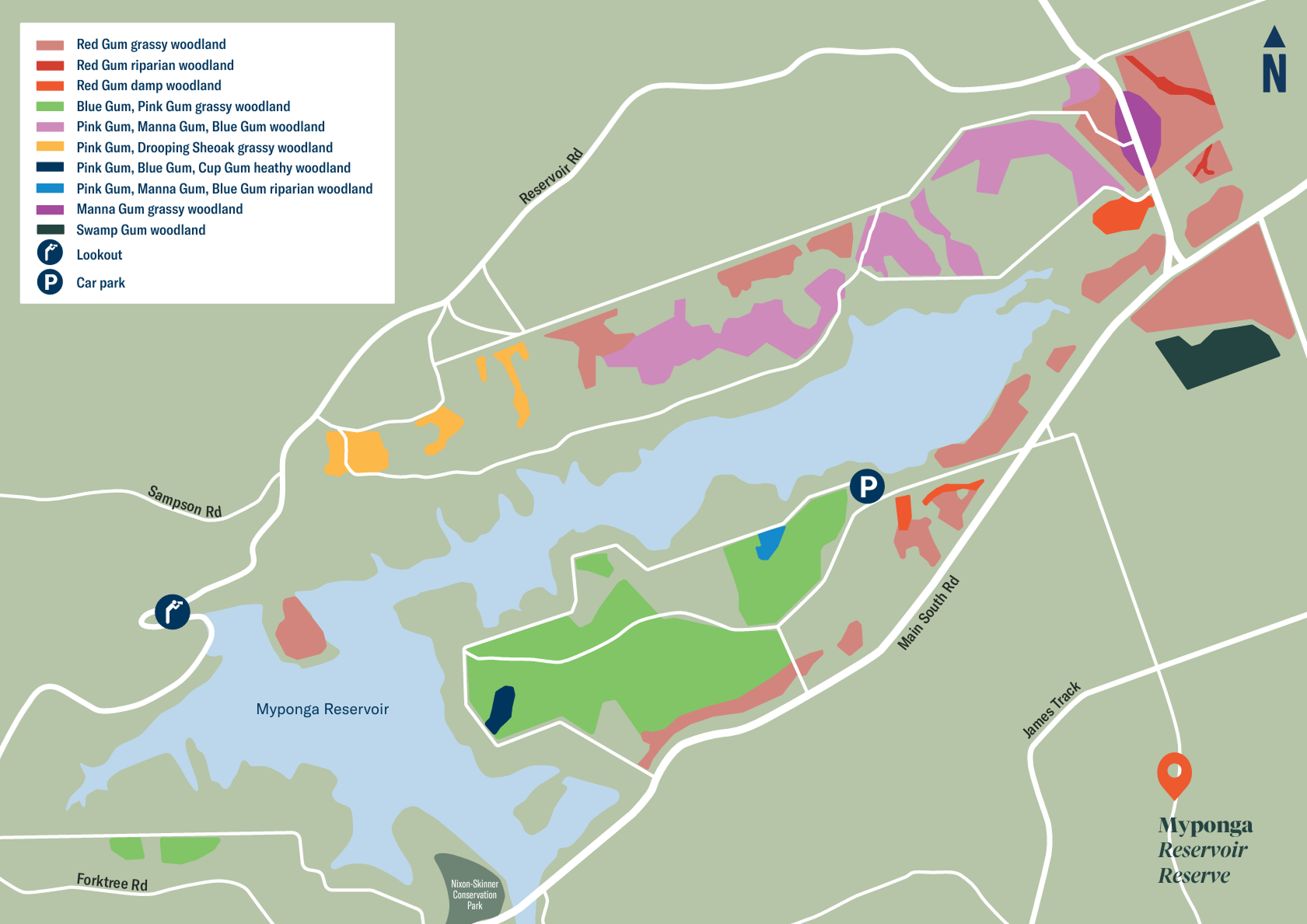
This map shows the Myponga Reservoir Reserve Reservoirs for Nature project area near Myponga. Coloured polygons identify the vegetation communities being restored across several planting sites around Myponga Reservoir. Restoration areas include Red Gum grassy woodland, Red Gum riparian woodland, Red Gum damp woodland, Blue Gum and Pink Gum grassy woodland, Pink Gum, Manna Gum and Blue Gum woodland, Pink Gum and Drooping Sheoak grassy woodland, Pink Gum, Blue Gum and Cup Gum heathy woodland, Pink Gum, Manna Gum and Blue Gum riparian woodland, Manna Gum grassy woodland, and Swamp Gum woodland. The map also shows Myponga Reservoir, surrounding roads, a lookout and visitor car park locations. Multiple restoration sites are distributed throughout the reserve, demonstrating the range of native vegetation communities being established as part of the Reservoirs for Nature program.

Planning and design

Our teams used Geographic Information System (GIS) technology to digitally map every planting, ensuring the restored vegetation reflects natural patterns while meeting carbon sequestration requirements.

The planting design includes approximately 5,900 individual mounds, arranged to reflect the natural landscape.
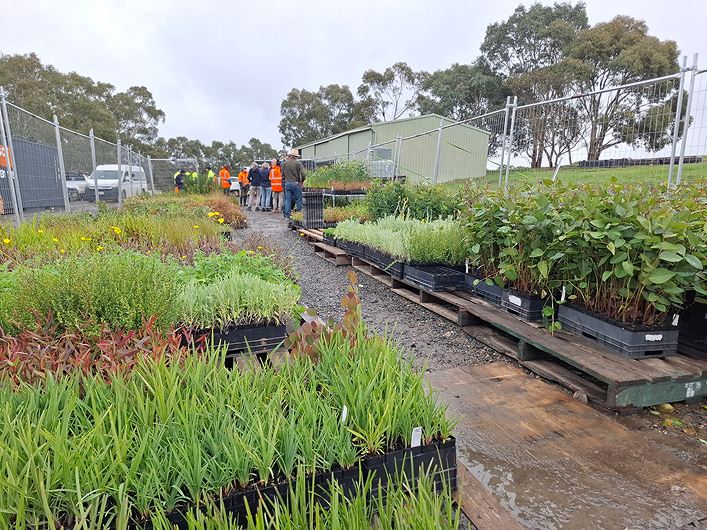
Native plants being prepared for planting as part of the Reservoirs for Nature program. Trays of young native grasses, shrubs and other seedlings are arranged on pallets along both sides of a gravel access path within a fenced nursery or staging area. Several people wearing high-visibility clothing are gathered near the end of the path among the plant stock. A large shed and established gum trees are visible in the background under an overcast sky. The image highlights the scale and variety of native plants being grown and prepared for restoration activities at the reservoir reserve sites.

What we're planting

Interested in what we’re planting?

Our printable planting lists for Myponga list species commonly available from specialist native nurseries.

Download the Myponga native plant species list PDF (970Kb)

A long-term commitment

It will take 25 years or more for all the plantings to fully mature.

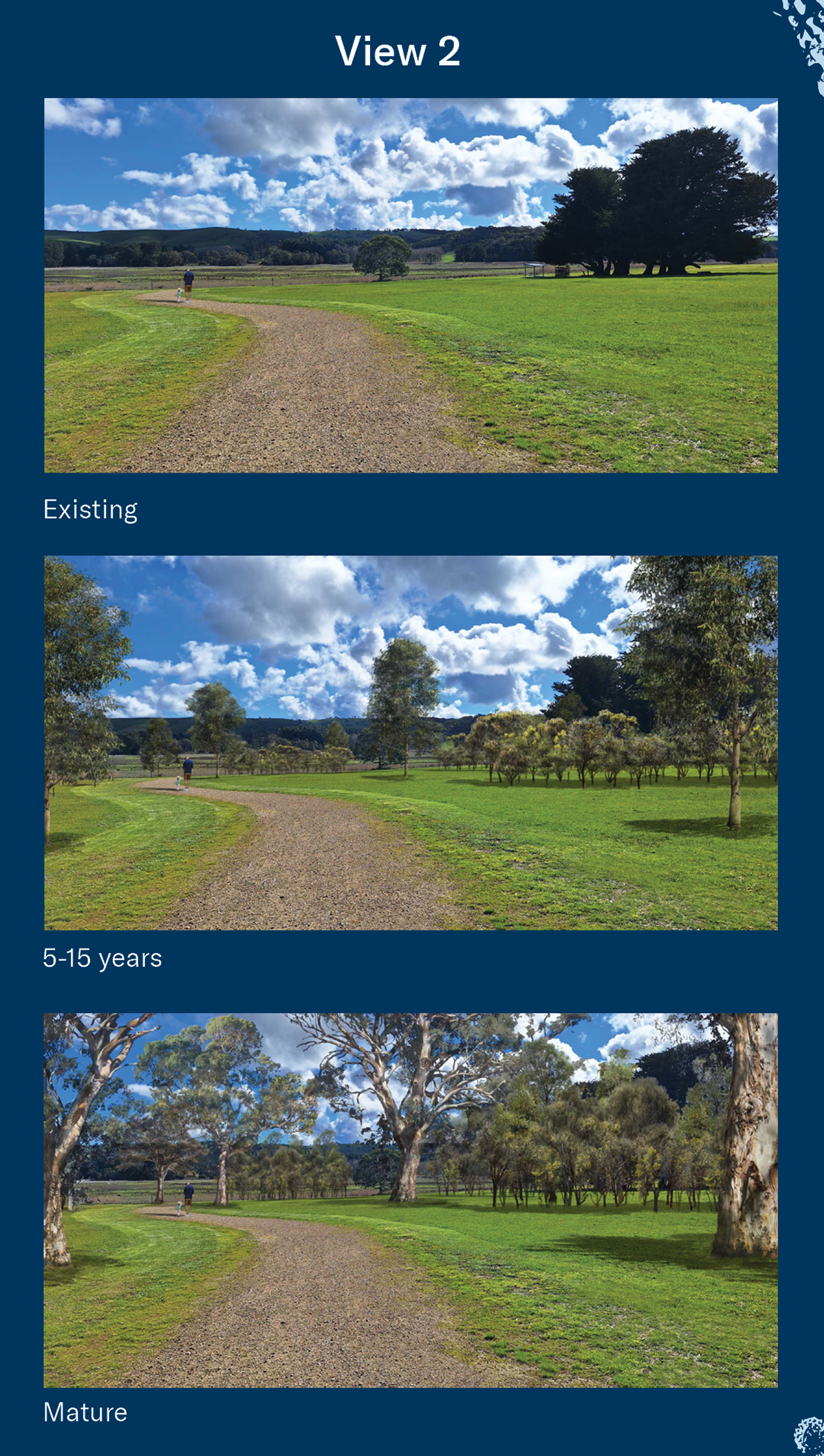
These photos show how the landscape at Myponga Reservoir Reserve will gradually change as the planting areas grow and establish over time.
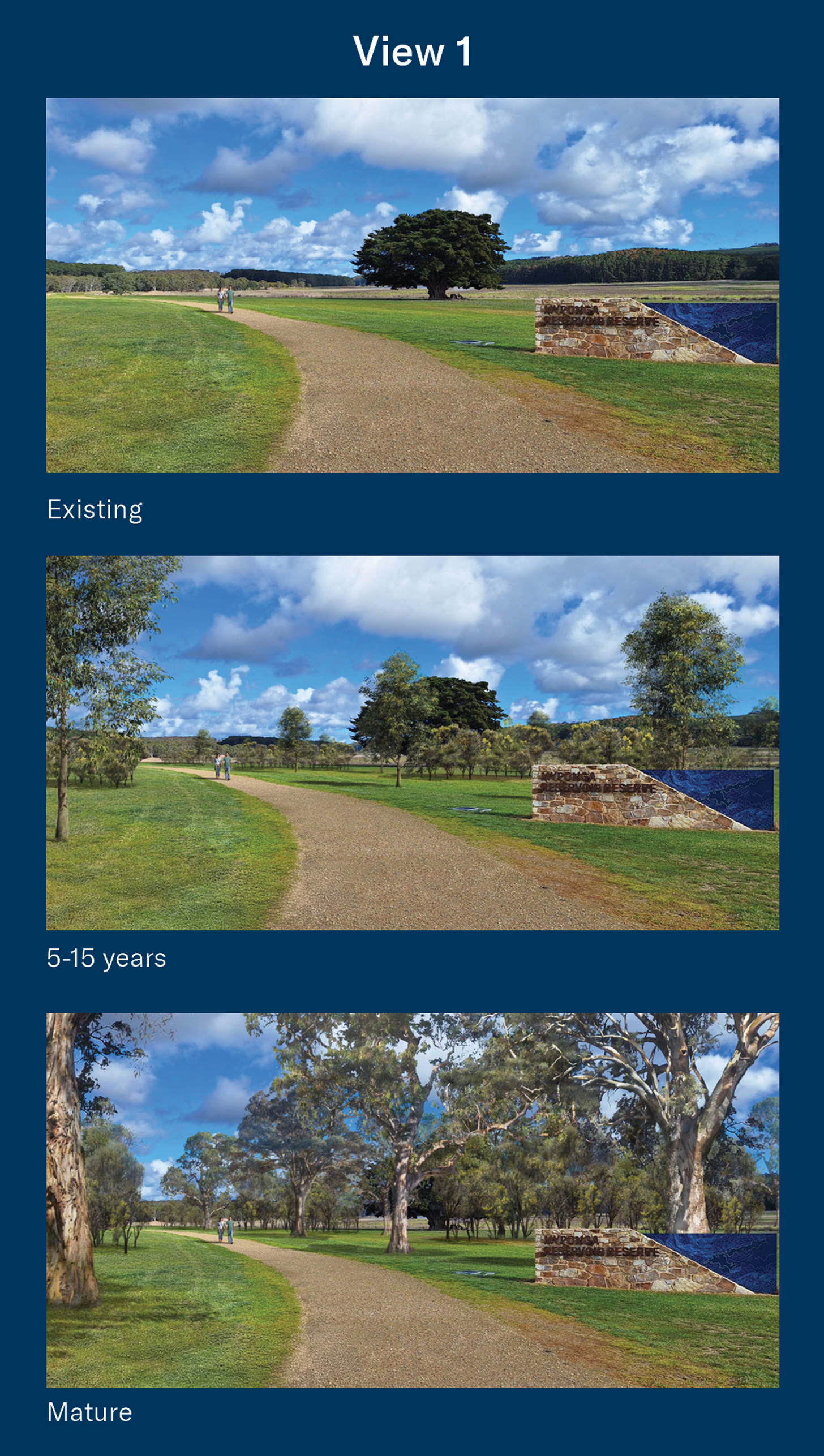
This image presents a visualisation of how a Reservoirs for Nature planting area at Myponga Reservoir Reserve is expected to change over time. Three landscape views are shown from the same location along a gravel walking path near the reservoir reserve entrance sign. The first image, labelled "Existing", shows an open grassy landscape with a large established tree and limited surrounding vegetation. The second image, labelled "5–15 years", illustrates the site after restoration plantings have become established, with a greater number of young trees and shrubs visible throughout the landscape. The third image, labelled "Mature", shows the same area after the vegetation has reached maturity, with large trees, a more developed canopy and denser native vegetation surrounding the path. Together, the images demonstrate the long-term transformation of the landscape as Reservoirs for Nature plantings grow and establish over time.

This image series, labelled "View 2", presents a visualisation of how a Reservoirs for Nature planting area at Myponga Reservoir Reserve is expected to change over time. Three landscape views are shown from the same location along a curved gravel walking path beside an open grassy area. The first image, labelled "Existing", shows a largely open landscape with grassed areas, a small number of established trees and distant hills in the background. The second image, labelled "5–15 years", illustrates the site after restoration plantings have become established, with additional young trees and shrub plantings visible on both sides of the path. The third image, labelled "Mature", shows the same landscape after the vegetation has reached maturity, featuring large established trees, a more developed canopy and denser native vegetation throughout the area. Across all three views, the walking path and surrounding landscape remain visible, demonstrating how the Reservoirs for Nature plantings are expected to gradually transform the site over the next 25 years while maintaining public access and open green space.

Get involved

We will be hosting community events at Myponga Reservoir Reserve, including ecology and bird walks in partnership with Nature Play SA.

These events will provide opportunities for local schools and the broader community to get involved and learn more about Reservoirs for Nature.

Stay up to date with upcoming events and project updates from the Myponga reservoir reserve site.

Get updates and event information